Commercial operations generate debris streams that overwhelm municipal curb limits. RapidBin Disposal deploys roll-off containers tailored to facility overhauls, retail retrofits, and warehousing cleanouts. Delivery…
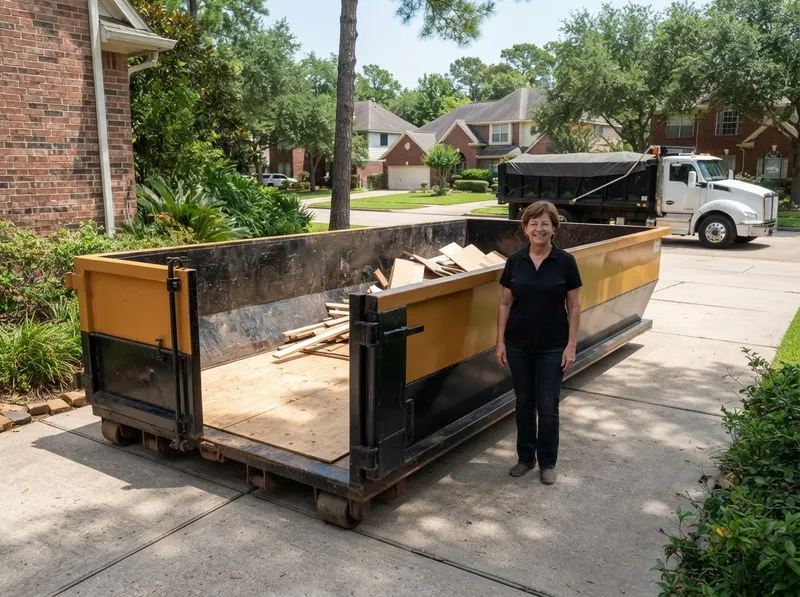
Commercial operations generate debris streams that overwhelm municipal curb limits. RapidBin Disposal deploys roll-off containers tailored to facility overhauls, retail retrofits, and warehousing cleanouts. Delivery covers high-density commercial corridors including West University Place, The Heights, and EaDo (East Downtown). Managing trade refuse requires strict compliance with Texas Commission on Environmental Quality waste characterization rules, ensuring industrial solids stay segregated from prohibited materials. Drivers position containers on protective hardwood runners across concrete aprons and commercial asphalt lots, mitigating stress cracks from loaded gross vehicle weights. A 10-yard bin holds 4 pickup truck beds of dense shop fixtures, while a 40-yard industrial bin accommodates large-scale interior buildouts.
Selecting container volume depends on physical material weight and available alleyway clearance. Dense masonry and demolition tiles require conservative cubic volumes to prevent hydraulic hoist overages, following guidelines from the heavy equipment hauling standards that regulate hook-lift capacity. For lighter office gut-outs containing drop-ceiling grids and cubicle walls, larger 30-yard or 40-yard roll-offs provide necessary vertical side clearance without exceeding legal highway payload ratings. Site managers in locations like River Oaks and Montrose must maintain a minimum 14-foot overhead clearance below utility lines and canopy trees. All equipment placements comply with City of Houston right-of-way regulations when placed outside private property lines.
Disposal workflows follow verified regional handling pathways. All non-salvageable loads route through licensed municipal transfer points under Harris County environmental services oversight. Recyclable ferrous components, HVAC ducting, and clean dimensional framing timber get routed to regional sorting yards in accordance with the EPA sustainable materials management framework. Operations conform to worker staging practices defined by the OSHA material handling and disposal standard 1926.252 to keep fire exits and loading docks clear of uncontained refuse.
Container transit through the Memorial corridor, Meyerland, Clear Lake, and Kingwood relies on heavy-duty tri-axle chassis certified under Texas Department of Transportation motor carrier safety statutes. Operations monitor urban pavement load thresholds using criteria established by the American Society of Civil Engineers infrastructure guidelines. Corrugated shipping scrap and bulk office paper diverted during warehouse tenant transitions match processing protocols verified through the National Waste & Recycling Association industrial waste guidelines. Every roll-off features grease-packed steel rollers and heavy latch hinges aligned with structural criteria from the American National Standards Institute waste container specifications ANSI Z245.30.
Every job gets a firm, written price after a free on-site visit.
For standards, safe disposal, and service guidance on DUMPSTER in Houston, TX, useful references include U.S. EPA, EPA, EPA, OSHA, Earth911, and Google Maps. General consumer and small-business resources are available from USA.gov, Better Business Bureau, FTC Consumer Advice, U.S. Small Business Administration, and Ready.gov.
Tell us about your commercial waste dumpster job in Houston and we'll send a clear, written quote, usually the same day.
 RapidBin Disposal